

Be considerate, make plans clearly and ask when a local habit is unclear. Australian social life can feel relaxed on the surface and still have plenty of small signals to learn. Someone may call a manager by their first name, then expect a clear update before a deadline. A friend may say “we should catch up” without choosing a day. At a shared meal, “bring a plate” means bring something to eat. These moments get easier when you look at the setting, ask one plain question and give people time to explain.
There is no single way Australians speak, host, work or spend time. The examples here describe situations many newcomers encounter; your workplace, neighbourhood and family circles will each have their own habits.
A Few Situations You May Meet Early On
| Situation | What is usually helpful |
|---|---|
| Someone opens with “How are you going?” | Give a brief answer and ask back if you like. It is often a greeting, not a request for a full update. |
| A colleague introduces themselves by first name | Use the name they gave you. Keep a more formal greeting if the occasion calls for it. |
| A friend says “we should catch up” | Treat it as friendly interest; suggest a day and place if you want to make a plan. |
| You are invited to “bring a plate” | Ask what kind of food would fit and whether anyone has dietary needs. |
| A group orders at a café or settles a bill | Check whether to order at the counter or table, and ask early how the group wants to pay. |
| You hear an unfamiliar joke or expression | Ask what it means. You can also say when a comment has crossed a line for you. |
Greetings, Names And Conversation
“Hi”, “How are you going?” and “How’s it going?” are common openings in many settings. A short “Good, thanks — how about you?” is enough when you are passing in a corridor or greeting a shop worker. If someone actually needs to know how you are, they will usually make that clear by the way they follow up. You can answer briefly even on a difficult day; the greeting does not require you to perform cheerfulness.
“Mate” appears in some conversations between people who know each other, and sometimes in casual service or work settings. It can sound warm, teasing or overly familiar depending on the speaker and situation. You do not need to use it to sound Australian. Slang is regional and generational, and plenty of people use very little of it.
First names are common at many workplaces and universities, including when people have different job titles. Follow the introduction you receive. If you are unsure, “What would you like me to call you?” is natural. A more formal title may still be right in a clinical, legal, ceremonial or first-contact setting; the person’s preference is the best guide.
Small talk often starts with the weather, the commute, sport or weekend plans. It can be a light way to share a few minutes before a meeting, class or appointment. You can keep your answer short, ask a question back, or move to the matter at hand. Nobody needs a memorised list of safe topics. Questions about a person’s income, visa history, religion, family plans or background can feel intrusive when you have just met, so let personal subjects develop at the other person’s pace.
Humour can include understatement, dry delivery and teasing. People do not all enjoy the same humour, and a joke can land differently when you do not yet know the speaker. If you miss the point, try “I’m not sure I got that — what do you mean?” If a remark is personal or uncomfortable, you can say so plainly. At work, respect and equal-treatment protections apply regardless of whether someone calls a comment banter.
Making Plans And Reading Invitations
A phrase such as “we should catch up sometime” can express genuine warmth without being a settled invitation. If you would like to see the person, make it concrete: “Would you like to get coffee next week? Tuesday or Thursday suits me.” A real plan usually has a time, a place and a way to confirm it. “What time suits?” or “Shall we meet at the station café?” is clearer than trying to infer the plan from a vague phrase.
People can be casual about the style of an invitation and still care about the time. If you are invited for 6 pm, arriving close to then is usually considerate. For a large open-house event, guests may come and go across a stated window; for dinner at someone’s home, check whether the host means the start time. If traffic or a delayed train will make you late, send a quick message with your updated arrival time. If you can no longer attend, tell the host rather than leaving them to wonder.
Coffee, lunch, a walk, a local market or a community event can all be ways to get to know someone. Alcohol is optional. You can order water, tea or a soft drink, suggest a café, or simply say “No thanks, I’m not drinking tonight.” People have different reasons for not drinking, and you do not owe a personal explanation. Government health guidance includes alcohol-free options for social settings.
Eating Out, Visiting A Home And Sharing Food
Cafés commonly have different ways to order. At some, you choose a table and a staff member takes your order; at others, you order and pay at the counter first. Signs, a queue or the staff’s directions usually make the system clear. If not, “Do we order here or at the table?” gets you started. Some places ask for payment when you order, while others bring a bill later.
When a group bill arrives, people may pay separately, split it evenly or have one person pay and settle up later. The venue may or may not be able to divide a bill, especially for a large group. A quick “Would you like to split this or pay separately?” avoids assumptions. Tipping is generally not expected in most Australian venues. You can tip for service if you choose, but you are not obliged to add one; check the screen or receipt before confirming a payment.
At someone’s home, it is fine to ask whether to take your shoes off, where to put your bag, or if the host would like you to bring anything. Households differ: some ask guests to remove shoes, some do not. If the host says “bring a plate”, they mean a dish of food to share. Ask what would be useful and whether anyone has allergies or dietary requirements. A message such as “I can bring a salad or dessert — which would suit?” helps the host plan. If they say not to bring anything, take them at their word.
“BYO” means “bring your own”, but the invitation should tell you what to bring. For a private gathering, ask whether the host means drinks, food or both. On a restaurant booking, BYO generally refers to guests bringing alcohol where the venue allows it; the restaurant may charge corkage, so check its current policy before arriving. You can choose a non-alcoholic drink from the menu.
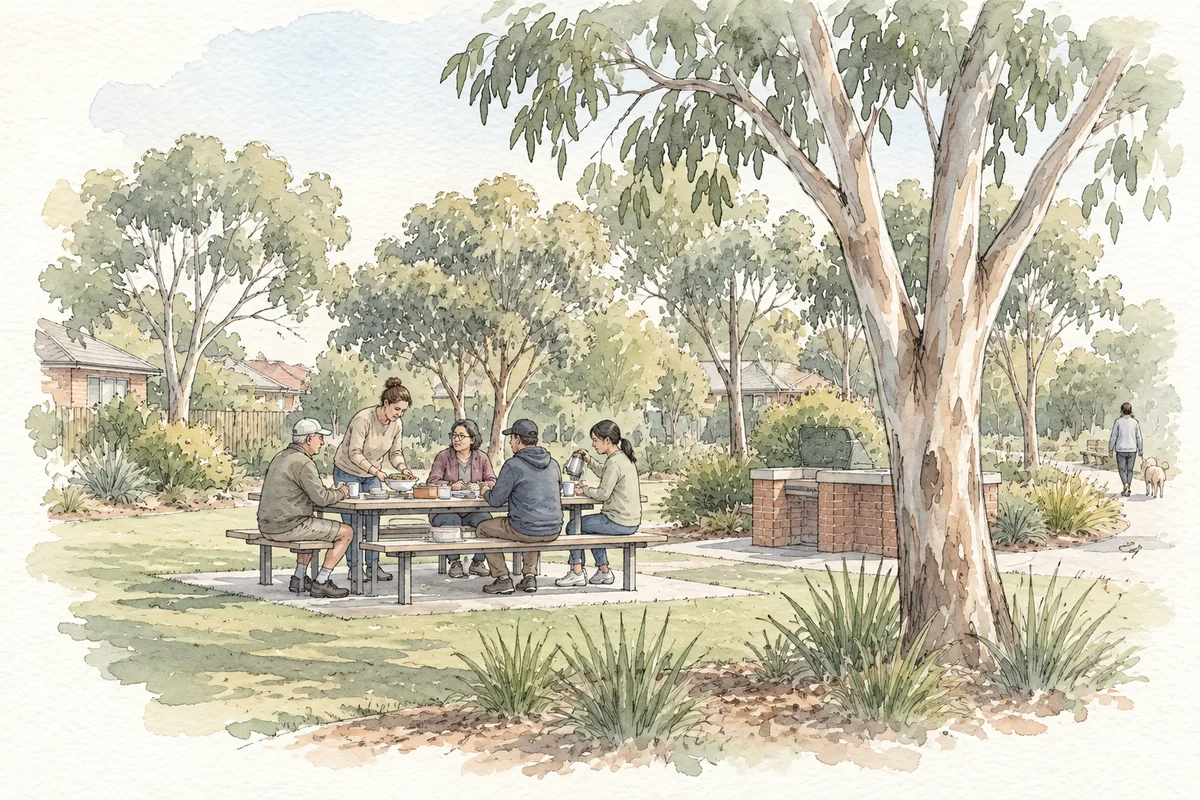
At a barbecue or shared meal, people may serve themselves, bring food to a common table and help with clearing up. Those routines vary by household. Wait for your host to explain how food is being served, and ask before assuming a dish is for everyone. If you have dietary needs, tell the host beforehand; if you are hosting, asking guests in advance makes it easier for everyone to take part.
At Work Or University: Friendly And Clear Can Go Together
First names and casual greetings do not tell you how formal the work itself will be. Notice how colleagues communicate about meetings, deadlines and decisions. Arrive on time for a shift, class, appointment or booked meeting. If a team meeting is described as starting at 9, be ready to take part then. A social barbecue may work differently; when in doubt, ask the organiser what time to arrive.
Australian workplace communication may be fairly direct, especially about what needs doing next. You can be direct and still sound respectful. Instead of guessing at an unclear request, try “Just checking: would you like the draft by Thursday, or before the meeting?” If instructions conflict, ask which task has priority. A brief update before a deadline is often easier for colleagues to act on than silence followed by an explanation afterwards.
Feedback styles vary by person and workplace. Some managers are informal when giving feedback; others are more structured. You can ask for an example or a clear next step: “Could you show me what you’d change in this section?” Friendly conversation does not remove the need for respectful treatment. Australian workplace protections cover discrimination and other prohibited adverse action; if conduct concerns you, keep a clear record of what happened and consult your workplace process or the Fair Work Ombudsman.
At university or training, a lecturer may invite students to use a first name, while assessment rules and appointment procedures remain formal. Check the course outline and student portal for deadlines, group-work expectations and how to ask for help. When speaking up in a class feels unfamiliar, a short email naming the course, the point you are unsure about and the question you need answered gives the teacher something concrete to respond to.
Sharing Public Space
At a bus, train, tram or lift, let people get out before boarding. If there is a clear queue, join at the end; if the order is unclear, ask who is next. Keep bags out of seats and aisles where you can, lower audio so others cannot hear it, and follow signs about priority seating and accessibility. The details of fares, tickets, boarding and etiquette vary between public transport systems, so check the local operator’s instructions for your city.
Parks, beaches and public barbecues are shared by people with different routines. Put rubbish in the bins or take it away, leave space for others and check whether a barbecue is available before planning around it. At a patrolled beach, swim between the red and yellow flags and read the posted signs. Those flags mark the supervised swimming area, while conditions and hazards can change. Follow lifeguard directions and the specific beach signs rather than judging safety by how calm the water looks.
Country, Community And Local Differences
Australia has many First Nations Countries, languages and community protocols. At an event, school, meeting or gathering, you may hear an Acknowledgement of Country or a Welcome to Country. An Acknowledgement can be offered by anyone to recognise Traditional Owners and their continuing connection to Country. A Welcome to Country is given by Traditional Owners or Custodians to welcome visitors to their Country. The two practices have different roles.
To learn whose Country you live or work on, look for information from local Traditional Owner organisations, a local council or a First Nations cultural centre. Follow the guidance of the community concerned. An Acknowledgement has no single national script; local knowledge and sincerity matter more than reciting a generic line. If an event includes a local protocol, listen to the people explaining it and follow their lead.
The 2021 Census recorded that 22.8% of people in Australia used a language other than English at home. That figure offers one view of the country’s cultural and linguistic mix, but it cannot tell you how a neighbour, coworker or classmate identifies. People may speak several languages, have different migration histories, belong to different faiths or none, and hold very different views about what feels familiar. Ask about someone’s own preferences instead of treating one person as a spokesperson for a whole community.
What To Try This Week
- Turn a friendly but vague suggestion into a clear invitation: offer a day, time and place.
- Before visiting someone’s home, ask whether they would like you to bring anything and whether shoes stay on.
- Practise one question that helps you act: “Should I order at the counter?” or “Would you like me to send this by Thursday?”
- Find a local source that explains the Country where you live or study.
- Invite a neighbour, classmate or colleague for coffee, lunch or a walk if you would enjoy getting to know them.
Learning customs is less about collecting perfect phrases and more about noticing the situation, responding with consideration and asking when a detail is unclear. The people around you will teach you the local version.
Australian Culture FAQs
Do I Have To Tip In Australia?
No. Tipping is not generally expected in most venues. You may leave a tip if you want to recognise good service, but check the amount before confirming a card payment.
What Does “Bring A Plate” Mean?
It means bringing food to share. Ask what kind of dish would fit, whether the host needs anything specific and whether guests have allergies or dietary requirements.
Should I Call My Manager Or Lecturer By Their First Name?
Follow the name they use when introducing themselves. If you are unsure, ask what they prefer. Some formal, clinical or ceremonial situations call for titles.
What If I Do Not Drink Alcohol?
You can still accept a social invitation. Order a non-alcoholic drink, suggest a café or a walk, or say simply that you are not drinking.
Does “We Should Catch Up” Mean There Is A Plan?
It may be an expression of interest rather than a set date. If you want to meet, suggest a specific day and place and see what works for both of you.
Related Reading
Explore these other Oz Unpacked articles on settlement and everyday decisions:
- What Australia’s Migration Numbers Actually Tell Us
- Australian Permanent Residency Benefits: What Can You Do?
Sources And Notes
Greetings, social language and everyday etiquette
The University of Canberra’s guide for international students covers greetings, shared spaces, punctuality and workplace tone. UTS College’s newcomer guidance discusses slang, greetings, transport and social plans. These are practical institutional guides; individual people and settings will differ.
- University of Canberra, Australian Culture and Etiquette
- UTS College, Quick Tips on Australian Culture
Workplace rights
The Fair Work Ombudsman explains protections from discrimination and other prohibited adverse action at work.
- Fair Work Ombudsman, Protection from discrimination at work
- Fair Work Ombudsman, Protections at work
Eating out, alcohol-free socialising and public safety
Tourism Australia summarises tipping expectations for visitors. The Australian Government health department discusses planning alcohol-free occasions. Surf Life Saving Australia explains beach flags, signs and supervised swimming areas.
- Tourism Australia, Key facts about Australia
- Australian Government Department of Health, Disability and Ageing, How can you reduce or quit alcohol?
- Surf Life Saving Australia, Beachsafe: Flags & Signs
Country protocols and cultural diversity
Reconciliation Australia describes the distinct purposes of Welcome to Country and Acknowledgement of Country. The Australian Bureau of Statistics reports 2021 Census cultural-diversity and language data.


